There’s something about a tiny bedroom that can make life feel instantly more chaotic. The laundry pile suddenly looks ten feet tall. The furniture feels oversized. The walls feel like they’re closing in. And if you’re sharing the room with kids, pets, or a mountain of unfolded clothes you swore you’d get to yesterday… it can feel impossible.
But here’s the good news: you do *not* need a massive renovation budget or a bigger house to make a small bedroom feel bigger.
Honestly, some of the coziest and most peaceful bedrooms I’ve ever seen were tiny. The difference wasn’t square footage. It was how the room was set up.
If your bedroom feels cramped, cluttered, dark, or overwhelming, these budget-friendly tricks can completely change the feel of the space without draining your bank account.
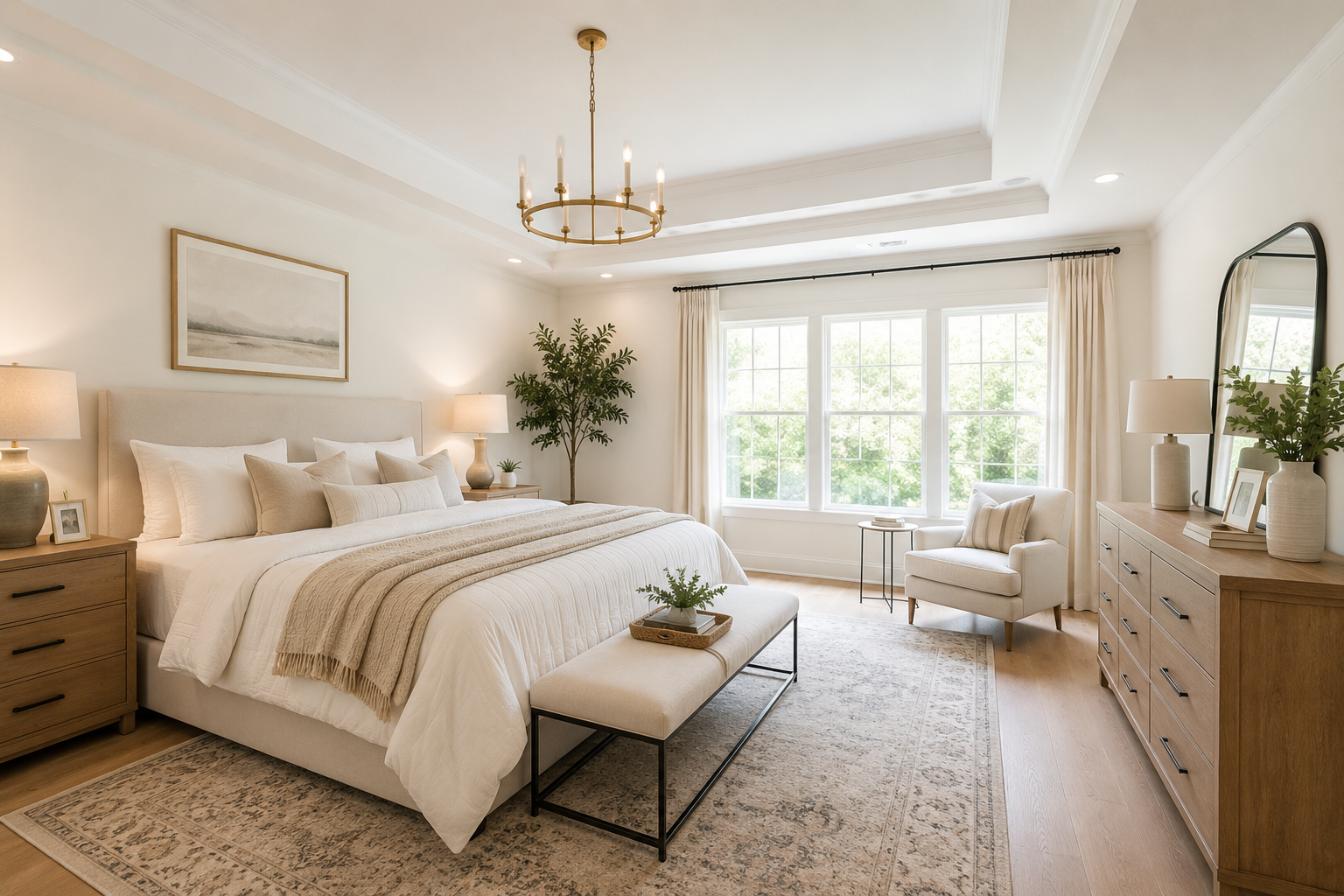
Start by Removing One Thing From Every Surface
Before you buy a single basket or move one piece of furniture, start here.
Small rooms feel suffocating when every surface is visually busy.
Nightstands covered in chargers, random cups, lotion bottles, receipts, and laundry instantly make a room feel smaller than it is. Even beautiful decor can start to feel heavy in a tight space.
Walk through your bedroom and remove just one thing from every visible surface.
That’s it.
You’ll be shocked how much calmer and bigger the room immediately feels.
Sometimes we think we need more storage when what we actually need is less visual noise.
Pull Furniture Away From the Walls
This sounds backwards, but hear me out.
A lot of people shove every piece of furniture tightly against the wall hoping it will create more room. But oddly enough, it can make the room feel stiff and crowded.
Even pulling the bed out a couple inches can create breathing room visually.
If possible, try:
* Leaving a tiny gap behind the bed
* Angling a chair slightly instead of pushing it flat
* Removing one unnecessary piece of furniture completely
Small bedrooms cannot handle “just in case” furniture.
If you have a bench, chair, dresser, storage cube, and nightstands all fighting for space, the room will always feel smaller no matter how organized it is.
Use Curtains the Right Way
This one makes a HUGE difference.
Hang curtains higher and wider than the actual window.
Seriously.
Instead of mounting the curtain rod directly above the window trim, raise it closer to the ceiling. Then extend it wider than the window frame.
It instantly draws the eye upward and tricks your brain into thinking the ceilings are taller and the windows are larger.
It’s one of those designer tricks that costs almost nothing but makes a room feel dramatically bigger.
And if your room is dark, swap heavy curtains for lighter fabrics that let natural light through.
Tiny dark rooms feel tiny.
Tiny bright rooms feel cozy.
Big difference.
Stick to Lighter Colors (But Don’t Make It Boring)
You do not have to paint everything sterile white.
But lighter tones help bounce light around the room and create openness.
Soft beige, warm white, light sage, dusty blue, pale gray, or creamy tan can make a tiny room feel peaceful instead of cramped.
The key is keeping the room visually soft and cohesive.
Too many bold contrasting colors in a small space can make it feel choppy and cluttered.
If you love color, bring it in through:
* throw pillows
* art
* blankets
* one statement wall
* greenery
You can still have personality without overwhelming the room.
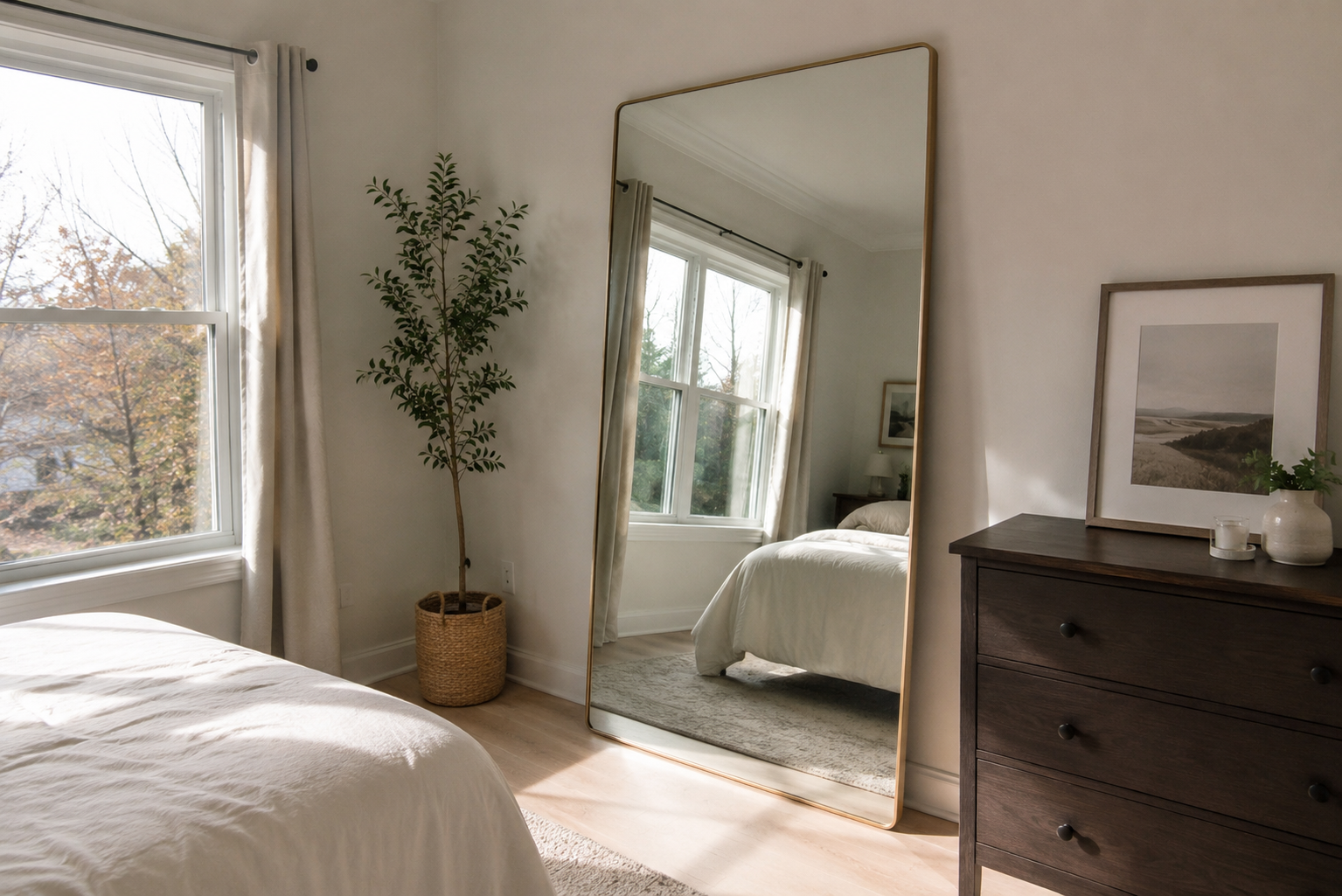
Use Mirrors to Reflect Light
This trick works ridiculously well.
A mirror placed across from a window reflects natural light and visually doubles the space.
You don’t need an expensive oversized mirror either.
Even a simple thrifted mirror leaned against a wall can make a tiny bedroom feel brighter and more open.
Bonus points if the mirror has a thinner frame instead of something visually heavy.
Clear the Floor as Much as Possible
Nothing shrinks a room faster than a crowded floor.
Shoes.
Laundry baskets.
Storage bins.
Random Amazon boxes.
Tiny kid socks somehow multiplying overnight.
The more floor you can see, the larger the room will feel.
Look for ways to get things vertically off the floor instead:
* wall hooks
* floating shelves
* under bed storage
* over the door organizers
* slim nightstands
A room with visible floor space automatically feels cleaner and larger, even if the room itself is tiny.
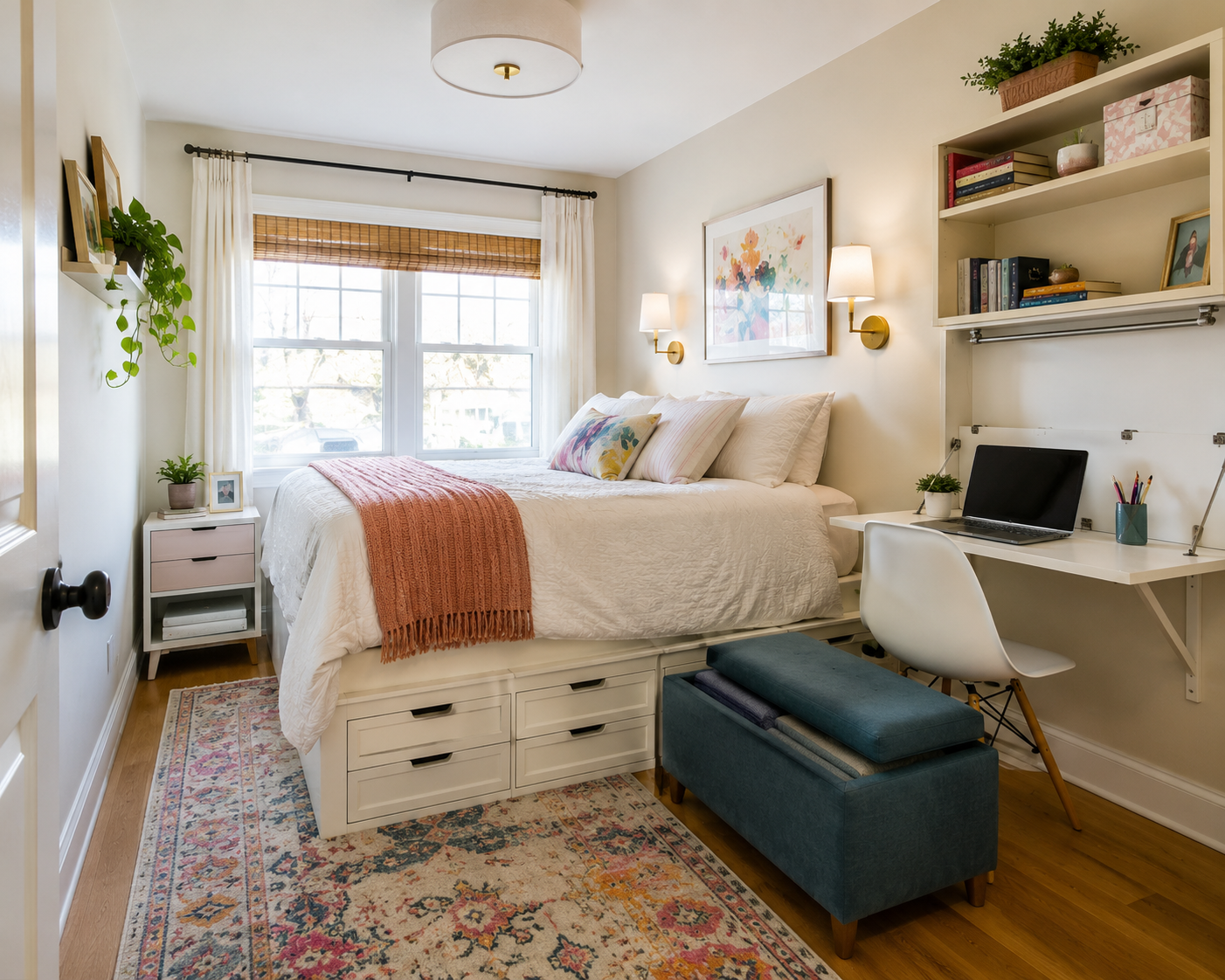
Choose Furniture That Does Double Duty
In a small bedroom, every item should earn its place.
Instead of:
* bulky dressers
* giant nightstands
* oversized storage furniture
Try pieces that serve multiple purposes.
Think:
* beds with storage drawers
* wall sconces instead of floor lamps
* narrow nightstands with drawers
* storage ottomans
* foldable desks
Tiny rooms work best when they’re intentional.
Make the Bed Every Morning
I know.
I know.
But this one matters more in a small room than almost anywhere else in the house.
When the bed is messy, the *entire* room feels messy because the bed takes up so much visual space.
A made bed instantly makes the room feel calmer, cleaner, and bigger.
And no, it does not have to look Pinterest perfect.
Straighten the blanket.
Fluff the pillows.
Done.
That alone changes the entire feel of the room.
Keep Decor Simple and Meaningful
Small bedrooms cannot breathe when every inch is decorated.
You don’t need seventeen signs, layered trays, giant floral arrangements, and tiny decor pieces covering every surface.
Choose a few things you genuinely love.
A cozy lamp.
One beautiful framed print.
A plant.
Soft bedding.
That’s enough.
A room feels bigger when your eyes have space to rest.
Let the Room Be Peaceful, Not Perfect
I think a lot of us secretly believe we’ll finally feel calm once the room is bigger.
But honestly?
Some of the most peaceful bedrooms are small, simple, and uncluttered.
A tiny bedroom does not have to feel like a burden.
With a few smart changes, a little decluttering, and some intentional design choices, you can make it feel cozy, functional, and surprisingly spacious without spending a fortune.
And sometimes, creating a home you love has a lot less to do with square footage and a lot more to do with finally making the space work for *you*.